01
Autonomous intelligence
Perception, navigation and task planning that run offline, on the same board as the sensors. No round trip to a ground station.

Autonomous robots for the lunar surface, and the on-board compute that lets them work without a lifeline.
Est. 2026 · China
Lunar surface — visualisation
01 — The conditions01 / 06
On the Moon those three are not edge cases. They are the baseline. A rover that waits for Earth is a rover that has stopped.
What is needed is a machine that perceives, decides and coordinates on its own — and a link that is allowed to be absent without the mission ending. Everything below follows from that single constraint.
This is the only problem we work on.
02 — The machine02 / 06
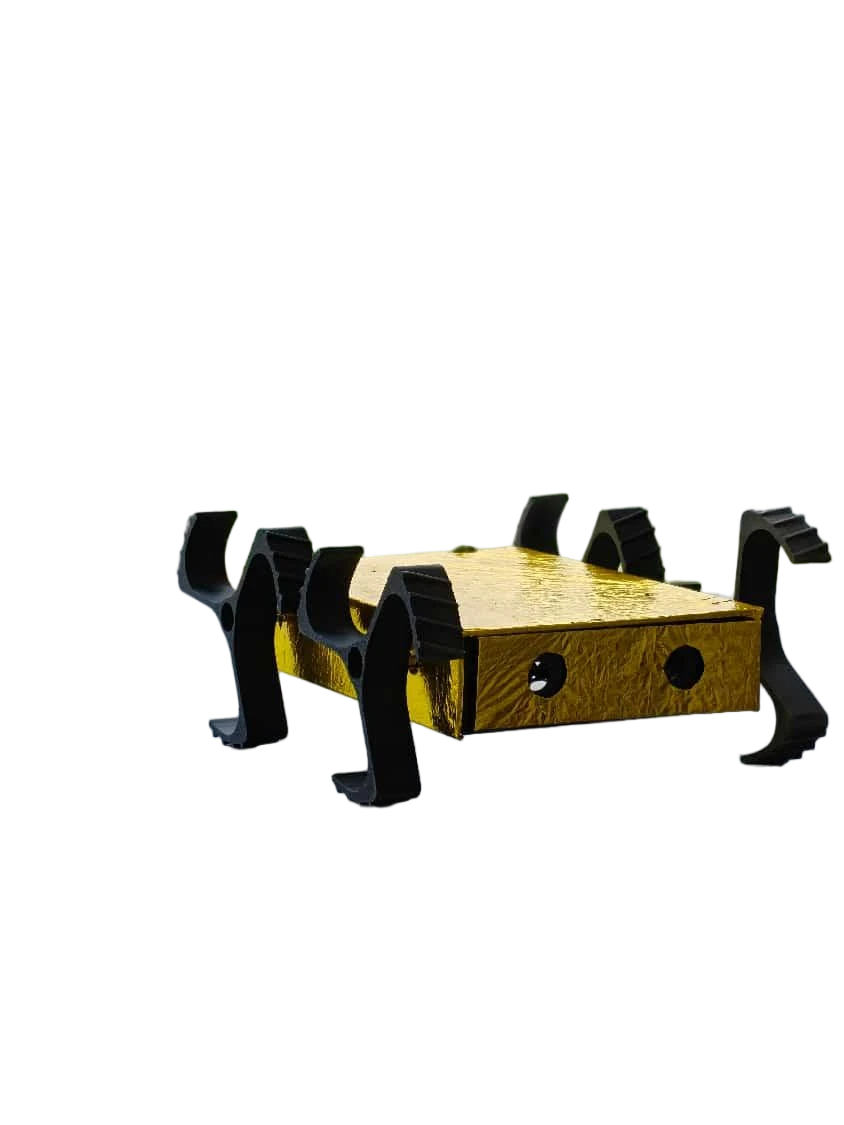
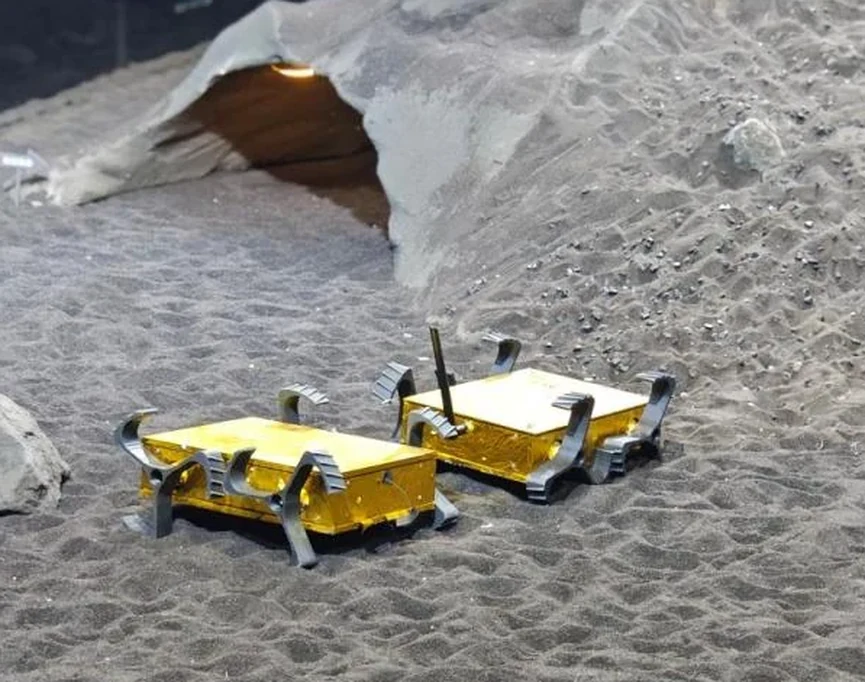
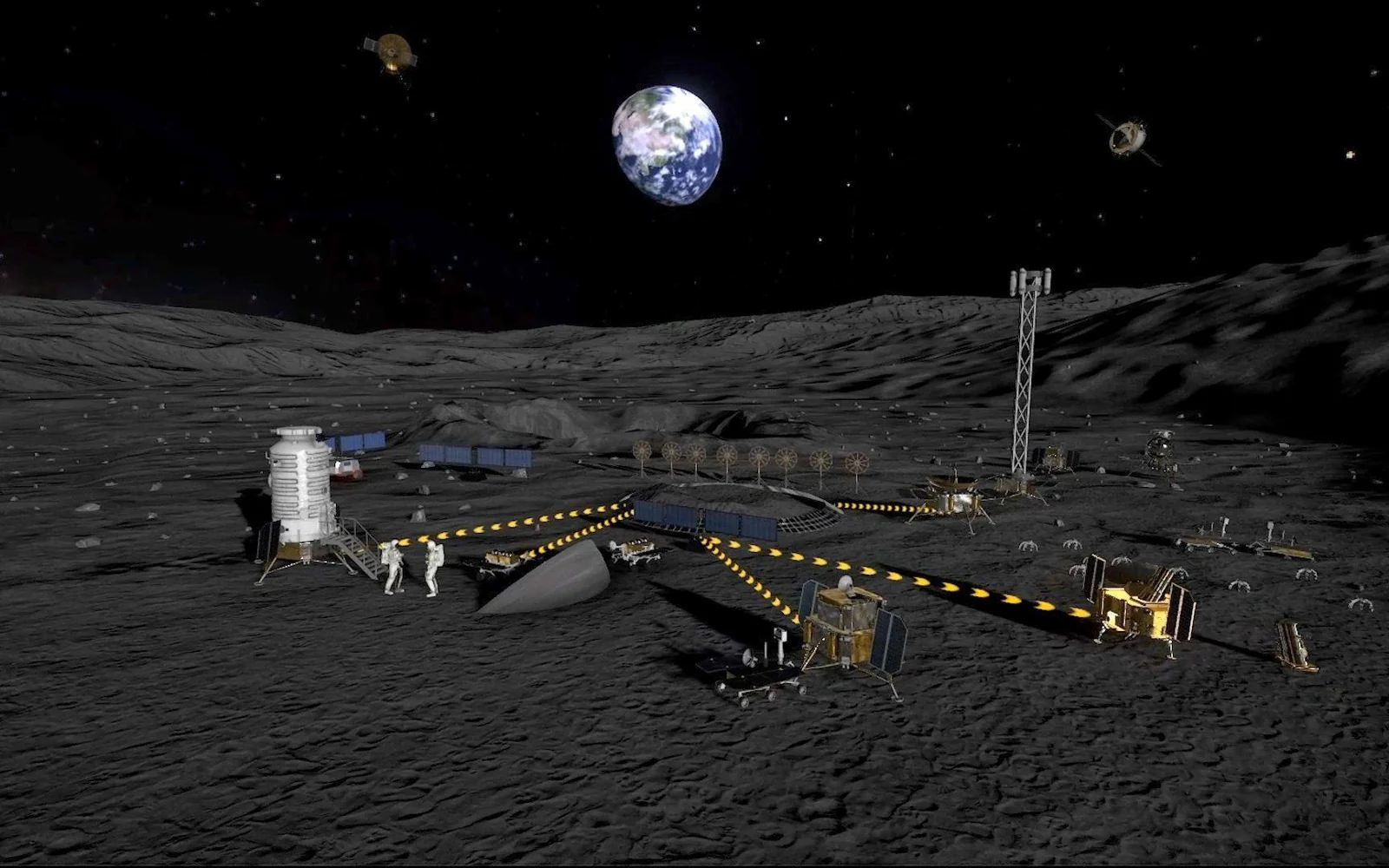
Images and science data are understood on the surface. Only conclusions travel home. Several units form a network and share position, task and compute — the nerve of a colony.
03 — The plan03 / 06
Now
L1 — Now
Modules, single units and algorithms, sold outside deep space. Short cycles, real revenue, and it pays for the machines.
L2 — 2027
Lunar rovers and surface construction vehicles delivered as whole systems rather than components.
L3 — Mid-2030s
The first closed loop: lunar material used where it is found, rather than shipped from Earth.
L4 — Late 2030s
Bases built and serviced by the same fleet — from a single mission to a long-duration presence.
L5 — 2040+
Hundreds of nodes, self-organising across the surface. The largest machine colony off Earth.
04 — Capability04 / 06
01
Perception, navigation and task planning that run offline, on the same board as the sensors. No round trip to a ground station.
02
Twenty years of end-to-end spaceflight: design, integration, test, launch, operations. A whole machine is run, not assembled.
03
Vacuum, thermal cycling, radiation, launch loads. The part that decides whether it survives the landing at all.
05 — Record05 / 06
ORION ARM is the only private company selected for both Chang'e-8 and Tianwen-3 — China's two deep-space flagship missions — with early projects through ILRS, the International Lunar Research Station.
Delivery credit built on flagship missions, and the engineering process that comes with them.
Zhejiang, Shenzhen and Beihang — instruments and custom builds for deep-space research.
Small, unit-level space nodes. High frequency, low mass, a delivery radius that reaches further than the domestic market.
06 — Contact06 / 06
Payloads, complete vehicles, module supply, joint laboratories.
Technical briefings, imagery, cleared statements.
Robotics, embedded systems, AI, structures and thermal, space systems.
hello@orionarm.com